
Wellbeing
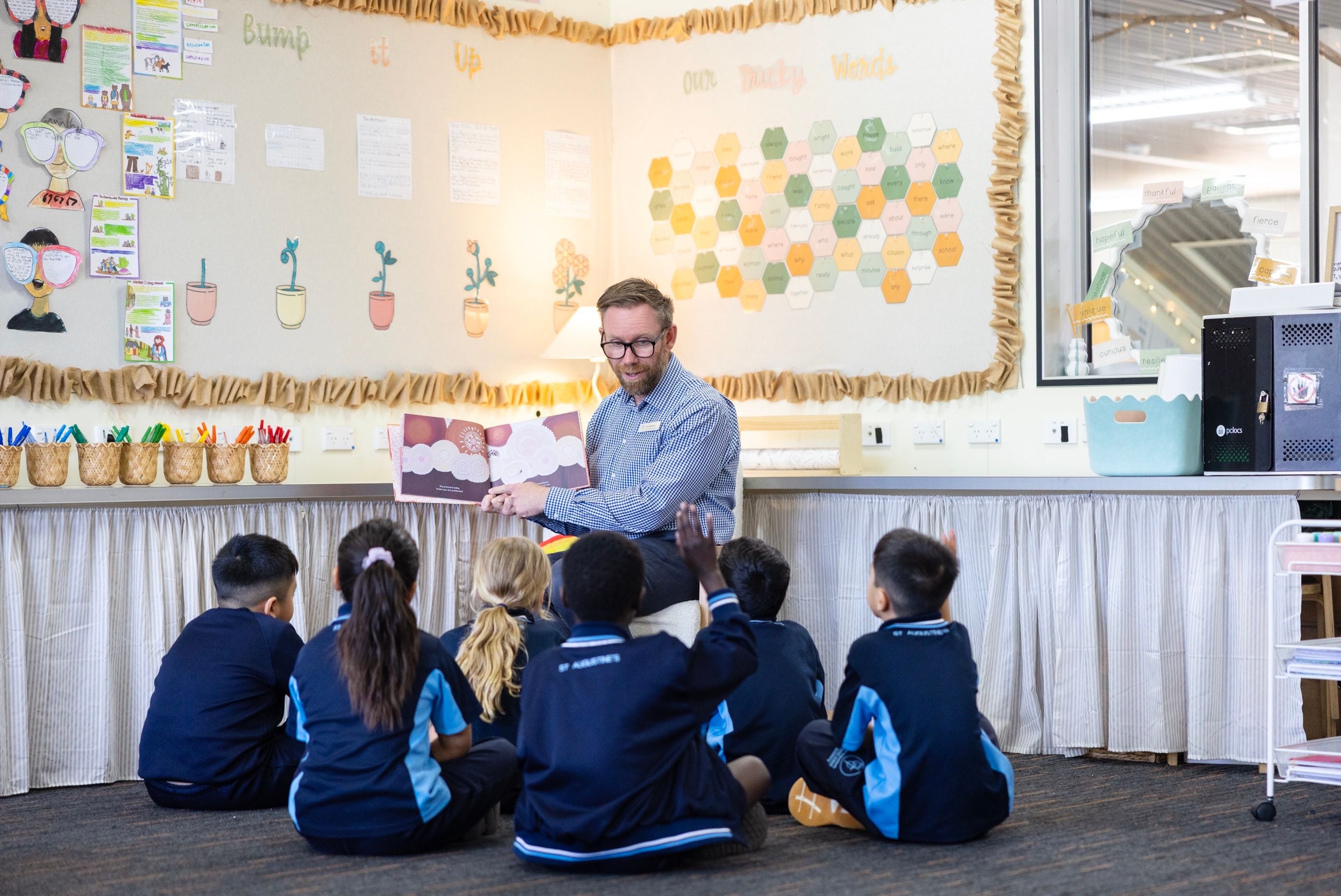
Wellbeing is a vital part of the holistic development of students at St Augustine’s Parish School. We provide students with learning opportunities and tools to develop social and emotional intelligence.
To support this development, the school has a qualified full-time School Counsellor and a Wellbeing Coordinator.
By fostering a sense of worth, agency, and safety, we encourage students to develop their full potential. At St Augustine’s, we support student wellbeing through the following strategies:
- Engagement with the principles of Positive Education
- Age-appropriate social skills programs
- Circle Time - an approach that supports the development of positive classroom culture
- Mindfulness practices
- Zones of Regulation
- Seasons for Growth grief and loss program
- Mentoring
Restorative Approach
St Augustine’s Parish School adopts a restorative practice approach to support students in developing social and emotional literacy.
This approach builds students’ capacity to problem-solve, take responsibility, and repair relationships. The restorative justice approach used at St Augustine’s creates safe and supportive spaces where the inherent worth of each individual is recognised, strengthening relationships within classrooms, the wider school, and the broader community.
Positive Education Approach
The Positive Education model can be viewed as a roadmap for what individuals and communities need to flourish.
It focuses on good health, positive emotions, supportive relationships, and a sense of purpose and meaning. Students are encouraged to identify and use their character strengths in ways that support both themselves and others, with flourishing at the heart of learning and wellbeing.
Making Space for Learning
Staff at St Augustine’s have been trained by the Australian Childhood Foundation in the Making SPACE for Learning framework.
This training supports staff to understand how toxic stress and trauma from a child’s past can impact their capacity to learn and relate to others. Staff implement trauma-informed strategies and approaches that support students who have experienced adversity.
This knowledge strengthens teaching practice and is applied to support all students - individually, in the classroom, and across the whole-school environment.